Email Automation: The Complete Guide for 2026
Imagine every new subscriber getting a personal welcome series, every abandoned cart receiving a timely nudge, and every lapsed customer getting a win-back offer — all without you lifting a finger after the initial setup. That’s email automation: emails sent automatically based on subscriber behavior, at exactly the right moment.
This guide covers how automation works, the essential sequences every business should run, how to combine it with segmentation and personalization, how to measure results, and the mistakes that sink most automation programs.
What Email Automation Actually Is
At its core, email automation is simple: pre-written emails sent automatically when specific conditions are met. Instead of manually sending each message, you build a workflow once and let your email platform execute it indefinitely.
This is different from a campaign (a one-off broadcast you send manually). Automation is event-driven and ongoing. A welcome sequence, for instance, triggers individually for each new subscriber — whether they join at 3 AM on a Sunday or noon on a Tuesday, the timing is relative to their action, not your schedule.
The payoff is leverage. You invest effort once — writing the emails, designing the workflow, setting the rules — and it keeps working for every future subscriber. That’s why automation is often the first thing experienced marketers set up and the last thing beginners try. This guide aims to close that gap.
How Automation Workflows Work
Every automation workflow, no matter how complex, is built from three components:
Triggers: What Starts the Workflow
A trigger is the event that enrolls someone in the workflow. Common triggers include:
- Joining your email list (or a specific segment of it)
- Making a purchase (or purchasing a specific product)
- Abandoning a cart
- Clicking a link in a previous email
- Visiting a specific page on your website
- A date-based event (birthday, subscription anniversary, trial expiry)
- Inactivity (no opens or clicks for a set period)
Conditions: The Decision Points
Conditions (sometimes called branching or if/else logic) let the workflow adapt to each subscriber. For example: if the subscriber opened the first email, send email B; if not, send a follow-up with a different subject line. This branching logic is what separates basic autoresponders from true automation.
ActiveCampaign is particularly known for this depth — even its entry-level Starter plan includes what the company describes as “strong automation foundations (including branching and multiple triggers),” and its Plus plan adds unlimited automation actions. Brevo’s Standard plan (from $18/month) includes marketing automation with unlimited contacts, making it a solid mid-priced option for businesses outgrowing basic sequences.
Actions: What Happens
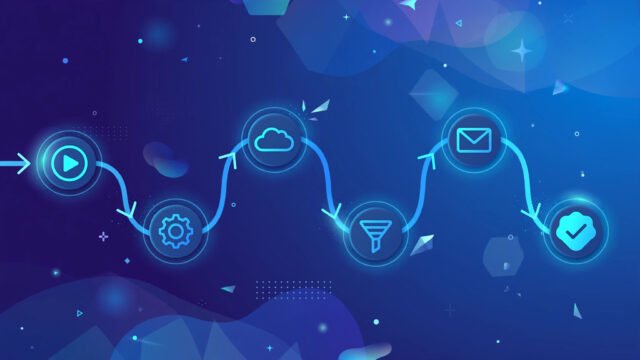
Actions are what the workflow does: send an email, wait a set time, add or remove a tag, move the subscriber to another list or workflow, update a custom field, or notify a team member. A typical workflow chains these together: trigger → wait 1 day → send email → check condition → branch accordingly.
Most platforms provide a visual builder — a drag-and-drop canvas where you connect triggers, conditions, and actions. You don’t need to code; you need to think clearly about the subscriber’s journey.
The Essential Automated Sequences
You don’t need twenty workflows. These five cover the majority of use cases, and you should build them in roughly this order:
1. The Welcome Sequence
Trigger: new subscriber joins your list.
Purpose: deliver the promised lead magnet, introduce your brand, set expectations.
A good welcome sequence is 3–5 emails over the first week or two:
- Immediate: deliver the lead magnet, say thanks, set expectations (what you’ll send, how often).
- Day 2–3: tell your story — who you are, why you do this, what makes you different.
- Day 4–5: share your best content or most popular products.
- Day 6–7: a soft call to action — a relevant offer, a reply prompt (“hit reply and tell me your biggest challenge”), or an invitation to follow you elsewhere.
Welcome emails earn exceptionally high engagement because the subscriber just opted in. Treat this sequence as the highest-leverage automation you’ll ever build.
2. The Onboarding Sequence
Trigger: new customer or new trial user.
Purpose: get them to their first success as fast as possible.
Onboarding differs from welcome: the person already bought or signed up for your product. The goal is activation — guiding them to the “aha moment.” Structure it around milestones: account setup → first key action → advanced tips → check-in. For SaaS, tie emails to actual product usage (if they haven’t completed setup after 3 days, send the setup guide again with a different angle).
3. The Abandoned Cart Sequence
Trigger: shopper adds items to cart but doesn’t check out.
Purpose: recover lost sales.
The classic structure is three emails:
- 1–3 hours after abandonment: a gentle reminder — “You left something behind.” Include the cart contents.
- 24 hours later: address objections — shipping info, returns policy, FAQs, maybe social proof.
- 48–72 hours later: a final nudge, optionally with a small incentive (free shipping, modest discount).
Keep the tone helpful, not desperate. And be careful with the incentive email — if every abandoner learns to expect a discount code, you’ll train customers to abandon on purpose.
4. The Re-engagement (Win-Back) Sequence
Trigger: subscriber hasn’t opened or clicked in a set period (e.g., 90 days).
Purpose: win them back or cleanly remove them.
A typical win-back flow: a “we miss you” email → a best-of-content roundup → a final “should we part ways?” email with an explicit choice to stay or go. Subscribers who don’t engage should be suppressed or removed — they hurt your deliverability and (on contact-based plans) cost you money. A smaller, engaged list always beats a large, cold one.
5. The Post-Purchase Sequence
Trigger: customer completes a purchase.
Purpose: confirm, delight, and generate the next sale.
This sequence is chronically underbuilt. At minimum: order confirmation → shipping updates → delivery confirmation with usage tips → a review request a week or two later → cross-sell or replenishment reminders based on the product. Post-purchase emails get high open rates (people want to know where their stuff is), making them ideal for building loyalty and reviews.
Segmentation + Personalization: Making Automation Smart
Automation without segmentation is just scheduled broadcasting. The real power comes from combining the two:
- Segment by behavior. New subscribers get the welcome sequence; repeat buyers get VIP early access; browsers who never buy get educational content.
- Segment by interest. Use tags from signup sources, clicked links, or stated preferences to route people into relevant workflows.
- Personalize beyond the first name. Reference past purchases (“Since you bought X…”), location, or lifecycle stage. Dynamic content blocks — different sections shown to different segments within the same email — let you personalize at scale without writing dozens of variants.
- Respect frequency across workflows. A subscriber in three workflows at once can get email fatigue fast. Use your platform’s sending rules or a global frequency cap so automation never overwhelms.
Measuring Automation Performance
Each workflow should be measured on its own terms:
- Entry rate: how many people enter the workflow per week — tells you whether the trigger is firing as expected.
- Email-level metrics: open and click rates per email in the sequence. Compare emails within the same workflow to find weak links.
- Completion rate: what percentage of entrants reach the end of the sequence vs. dropping off (unsubscribing or being removed by conditions).
- Goal conversion: the metric that matters — purchases from the abandoned-cart flow, activations from onboarding, re-engaged subscribers from win-back.
- Revenue per recipient (for commerce flows): total revenue attributed to the workflow divided by entrants. This is how you justify automation investment.
Review your core workflows quarterly. Audiences change, products change, and a sequence written two years ago may be quietly underperforming.
Common Automation Mistakes
1. Setting and forgetting. Automation isn’t truly “set and forget” — it’s “set and periodically review.” Broken links, outdated offers, and stale copy accumulate. Audit every workflow at least twice a year.
2. Over-automating too early. Beginners sometimes build twelve workflows before they have the traffic to feed them. Start with the welcome sequence, prove it works, then add the next one. Five solid workflows beat fifteen thin ones.
3. No exit conditions. Every workflow needs a way out. If someone purchases mid-sequence in a lead-nurture flow, they should exit immediately — not keep receiving “have you considered buying?” emails. Always define what removes someone from a workflow.
4. Ignoring the human touch. Automation should feel personal, not robotic. Write like a person, use plain language, and include reply prompts. Some of the best-performing automated emails are plain-text messages that look like they came from a human.
5. Triggering on weak signals. Not every page view deserves a workflow. Automate around meaningful intent — cart abandonment, trial signup, content downloads — not casual browsing, or you’ll come across as surveillance rather than service.
6. Skipping the double-check on timing. Time-zone-blind “good morning” emails, sequences that fire during holidays, or a Day-3 email referencing a “yesterday” that was actually four days ago — timing details matter. Most platforms offer send-time optimization or time-zone-based sending; use them.
Choosing the Right Tool for Automation
Your platform determines your automation ceiling. What to evaluate:
- Visual workflow builder with branching/conditional logic (not just linear sequences).
- Trigger variety — the more behavioral triggers available, the more responsive your automation.
- Contact/tag limits on automation — Brevo’s free plan, for instance, limits automation to 2,000 contacts; its Standard plan removes that cap. Kit’s free plan doesn’t include the visual automation builder or automated sequences at all — you’d need the Creator plan. Verify these limits before committing, as they’re exactly the kind of detail that surprises people mid-growth.
- Integration depth — your automation is only as smart as the data feeding it. Check that your store, CRM, or site connects properly.
For a full comparison of platforms with verified pricing, see our best email marketing software roundup. If deep, branching automation is your priority, ActiveCampaign’s automation-first design is worth a serious look; if you want strong automation at a lower price point, Brevo’s Standard plan is a compelling alternative.
The Bottom Line
Email automation is the closest thing marketing has to compound interest: effort invested once keeps paying out with every new subscriber, customer, and cart. Start with a welcome sequence this week. Add abandoned-cart or onboarding next. Measure, refine, and expand from there.
Pair this with solid fundamentals — our email list-building guide for growing the list that feeds your workflows, and email deliverability explained to make sure your automated emails actually reach the inbox.